357 EU-Africa
–France: 13) Cutting down Graffitti-carved Beech trees of soldier’s WWII celebrations
–Israel: 14) 2000 year-old date palm seed sprouted and keeps growing, now 1.5 meters
–Nigeria: 15) Inadequate control of the eco-system by the Federal Government
–Uganda: 16) African Golden Cat lives in the dense woods
–Cameroon: 17) World Environment Day celebration focuses on what’s wrong
–Sierra Leone: 18) alleged ‘strict new rules’ as timber export ban ends, 19) Log seizures,
–Zimbabwe: 20) Victoria Falls rainforest being destroyed by hotel builders / amenities
–Congo: 21) Rainforest Foundation’s efforts to save forest, 22) No war means logging,
–Ghana: 23) Illegal logging bust! 24) EU-oriented policy for legal / illegal logging,
–Madagascar: 25) 9 million tons of carbon offsets for sale
France:
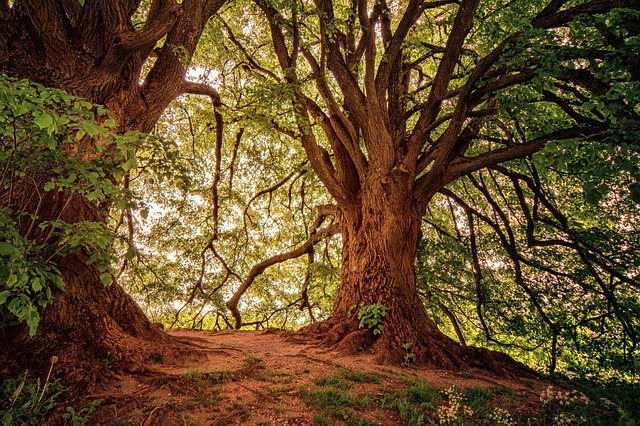
13) The beech trees of Saint Pierre de Varengeville-Duclair forest bore a poignant testimony to the D-Day landings for more than six decades. Thousands of American soldiers stationed there after the liberation of Normandy spent their spare hours with a knife or bayonet creating a lasting reminder of their presence. Although the trees grew and the graffiti swelled and twisted, this most peculiar memory of one of the 20th century’s defining moments remained visible – until now. Amid bureaucratic indifference and a dispute between officials and the forest owner, most of the trees have been felled, chopped up and turned into paper. Claude Quétel, a French historian and Second World War specialist, was horrified when he discovered what he called a catastrophe and a shameless act. “It is a typically French failing to wipe out the traces of the past,” he told The Times. “I am indignant.” Local people are calling for the few “name trees” that still stand to be classified as historic monuments and saved from the same fate. “It should have been done a long time ago,” said Nicolas Navarro, the curator of a Second World War museum in the grounds of his family’s 13th-century Château du Taillis near by. “It’s sad and pathetic that it wasn’t.” The trees surrounded land in the heart of Saint Pierre de Varengeville-Duclair forest, near Rouen in Normandy, which was once home to a US army camp named after the Twenty Grand brand of cigarettes. It was one of nine cigarette camps – along with Pall Mall, Old Gold, Philip Morris, Chesterfield, Lucky Strike, Home Run, Wings and Herbert Tareyton – used by troops needing treatment or waiting to be sent elsewhere. They were places of calm between the D-Day landings and the Ardennes, the Siegfried Line or the Pacific. http://www.timesonline.co.uk/tol/news/world/europe/article4124354.ece![]()
Israel:
14) ISRAELI researchers who grew a sapling from a date seed found at the ancient fortress Masada said today the seed was about 2000 years old and may help restore a species of biblical trees. Carbon dating confirmed that the seed – named Methuselah after the oldest person in the bible – was the oldest ever brought back to life, Sarah Sallon, a researcher at the Hadassah Medical Centre in Jerusalem, reported in the journal Science. The seed came from the Judean date palm, a species that once flourished in the Jordan River Valley and has been extinct for centuries, Sallon said. It was one of a group discovered at Masada, a winter palace overlooking the Dead Sea built by King Herod in the 1st century BC. The fortress was used by hundreds of Jewish insurgents in a revolt against Roman rule that erupted in 67 AD. “It has survived and flourished,” Ms Sallon said. Previous attempts to grow plants from ancient seeds failed after a few days. Since the seed was first germinated a few years ago, Ms Sallon said there had been some doubt whether it was really 2000 years old, like the others found at the site. “At first we couldn’t break off pieces of the seed for carbon dating,” Ms Sallon said. “But when we moved the plant to a larger pot, we found fragments of the the seed on the roots, which we were able to carbon date.” This showed the tree is about 2000 years old and preliminary genetic studies suggest it may share about half of its genetic code with modern dates. If the tree, which now stands about 1.5 metres tall, is female, it might be able to help restore the species which once formed thick forests throughout the Jordan River Valley, she said. http://www.news.com.au/story/0,23599,23856766-401,00.html![]()
Nigeria:
15) Inadequate control of the eco-system by the Federal Government is responsible for the deforestation in the country. Mr. Lawrence Ogundare, the desk officer, International Tropical Timber Organisation (ITTO) said this in an interview with newsmen in Abuja. He lamented that government has not taken full control of Nigerian forests as provided by law. “At the national level, the Federal Government is the policy maker,” he said, adding that states manage those within their jurisdiction. “As a result of this, the states cut the trees indiscriminately,” he said. He said a policy on forestry, which is being fine-tuned, would be domesticated in all the states of the federation. The policy, he said, needs legislative backing, otherwise it would be regarded as an ordinary document. “As soon as this is done, the Federal Government would hold states responsible for massive deforestation,” he said. He blamed those who planned the forest in the past for not putting in place adequate measures to check deforestation. “We have a lot of forest plantations all around but no proper maintenance of these forests,” he said. “If we had been maintaining our forests, we wouldn’t be talking about the depletion of our forests today,” he said. http://www.thetidenews.com/article.aspx?qrDate=06/12/2008&qrTitle=Inadequate%20control%20respo![]()
nsible%20for%20deforestation%20%E2%80%93%2
0Expert&qrColumn=ENVIRONMENT
Uganda:
16) The African Golden Cat is a medium sized cat and can grow to 90cm in body length and weigh up to 18kg. Although its name implies a golden coloured coat the golden cat is polymorphic – its base coat coloration varies extensively depending on its location -ranging from a golden/reddish brown to slate/silver grey. Primarily due to its dense rain forest habitat very little is known of the lifestyle and biology of the golden cat. Most reports suggest that golden cat is a solitary and crepuscular hunter but sightings of a golden cat stalking the mainly diurnal black-fronted duika in South West Uganda suggest that the cat may well be active during daylight hours in parts of its range. Apart from duika and other small antelope it is thought that the main part of the golden cats diet is made up of rodents, tree hyraxes and birds. There are conflicting reports of the golden cat foraging close to human habitation – sources around the Bwindi National Park in Uganda have confirmed that the preying on domestic poultry and livestock is common, whilst research in the Tai National Park in the Ivory Coast suggest that domestic predation is a rare occurrence. Small monkeys are also known to be taken by the cat which may suggest that although thought of as mainly terrestrial, the golden cat is also active in the lower branches of the forest canopy and can climb well. The primary habitat of the golden cat appears to be the Tropical Rain Forest belt which traverses the African equator, however penetration into the adjoining tropical Dry Forests and Savannah scrub is also in evidence. To the east of its range in Uganda the golden cat has been known to inhabit regions up to 3500 meters and be present as far east as the Mau Escarpment in western Kenya. Although the golden cat is said to prefer virgin forest, reports from around the Bwindi Mountain Gorilla National Park in South West Uganda suggest that the cat is equally at home in secondary forest areas where logging activities had led to an initial decline in many of the herbivore prey species and an increase in human activity. http://world-360.blogspot.com/2008/06/golden-cat.html![]()
Cameroon:
17) The irrational use of waste and the indiscriminate felling of trees for fuel became the concern of environmentalists during this year’s World Environment Day celebrations in Yaounde. Officials in the Ministry of the Environment and the Protection of Nature, MINEP, and the Coordinator of the United Nations System in Cameroon, called for the rational use of energy at the end of activities marking the Environment Day on June 5. The United Nations System Coordinator expressed concern on how pollution and the poor management of waste affect the health of local inhabitants.The coordinator also said the world is gripped by a carbon habit, which, according to her, should be discouraged in order to protect the environment. Against this backdrop, the US Ambassador to Cameroon, Janet Garvey, said the US Embassy supports a community-based waste management project put in place by Centre International pour la Recuperation, CIPREThe aim, according to the Garvey, is to bring together many stakeholders in the sorting, collection and management of urban household waste.She said one of the most important aspects of reducing waste is awareness. The diplomats pointed out that poor farming habits such as the felling and burning of trees deplete the soil and releases a lot of carbonic gases, which also deplete the ozone layer, causing climate change. http://allafrica.com/stories/200806121039.html![]()
Sierra Leone:
18) Sierra Leone on Thursday announced strict new rules to curb logging misuses, a day after lifting a six-month ban on the export of timber to stop alleged widespread plundering of its natural forests. “With immediate effect, forest rangers will have to supervise the cutting of trees for logs and no tree should be cut without their supervision,” Forestry Minister Sam Sessay said. He added that all loggers must apply for a transportation permit from the ministry before moving any timber and said all wood due to be exported should have a special identification code from the ministry. “The process is not to frustrate investors but to put proper rules and regulations in place,” he explained. The authorities are also promising a reward to anyone who gives “credible information about illegal logging.” Informants “will receive compensation of one-tenth of the cost of the logs arrested and confiscated,” ministry forestry expert Mohamed Hassan said. In January, Sierra Leone banned timber experts after complaints that mostly Chinese logging companies were destroying the country’s forests, plundering natural resources and causing environmental problems. Experts calculate that logging is a multi-billion dollar (euro) business in Sierra Leone with Chinese companies leading in the trade. A 2006 European Union report identified logging as “the leading cause of environmental degradation in Sierra Leone.” Environmental watchdog Global Witness, which focuses on the exploitation of natural resources in conflict zones, said earlier this year that there was an upsurge in illegal logging in the country. Already devastated by a bloody decade-long civil war, many communities in the north-west of Sierra Leone who depend on the forest for their livelihoods are complaining that Chinese loggers are destroying it. “The Chinese are depleting the forest cover without replanting trees,” environmental activist Morlai Sulaiman said. A villager who lives near the northern national park of Outamba-Kilimi added that the loggers often duped local residents. “Chinese loggers would promise us roads, water and clinics but after cutting down the trees, they would drive their heavy trucks without even talking to us,” Alpha Kamara lamented. http://afp.google.com/article/ALeqM5huANkm_ZqmMrWJVxUJpTuNrtvKhg![]()
19) Statistics from the East Provincial Delegation of Forestry and Wildlife indicate that 1665 cubic meters of white wood were seized from loggers in the Dengdeng and Goyoum forest reserves between November 2007 and April 2008. According to the Provincial Chief of Forest Control Brigade, Pone, the seizures came within the framework of an operation dubbed “Operation coup de poing” launched on November 12, 2007 by the East Provincial Delegate for Forestry and Wildlife, Bruno Mfou’ou Mfou’ou. The operation was intended to weed out loggers from these forests whose conservation is one of the preconditions for the construction of the Lom-Pangar Dam.The wood, according to Pone, was auctioned for FCFA 22,000,000 and the proceeds deposited in the public treasury. Elsewhere in the Province, 2100 cubic metres of sawn timber were seized from loggers within the same period. Pone further revealed that 18 offence cases related to illegal logging were taken up by the Provincial Delegation the last six months. He said some of the cases have already been forwarded to the Ministry for further action. Guilty parties could be required by the 1994 forestry laws to suffer prison terms ranging from one year to three years or fines ranging from FCFA 3,000,000 to FCFA 10,000,000.It remains to be seen whether those civil proceedings will lead anywhere, given that those in power generally tend to connive with the loggers. A recent study carried out in the East Province shows that 21 percent of civil proceedings taken by forestry officials in the East Province against illegal loggers were “stopped by some one on high up.” Tracking down illegal loggers is hampered by a number of factors. Eco-guards are so poorly equipped that they find it difficult to monitor large areas of forestland. Secondly, they are few in number as one forest controller has to monitor over 20,000 hectares of concessions and loggers have developed the instinct to skirt the controllers. http://allafrica.com/stories/200806121074.html![]()
Zimbabwe:
20) BULAWAYO – The Victoria Falls rainforest along the Zambezi River could lose its place on the World Heritage Sites list, owing to business activities in the area. Ethel Mlalazi, director of the Victoria Falls Department of Physical Planning, said something needed to be done urgently to save the rainforest. “This comes as a result of some helicopter operators doing business along the Zambezi River from the Zambian side. The construction of hotels and lodges is another factor. But there has been a joint heritage management plan agreed to by Zimbabwe and Zambia to stop major developments that go against the rules of UNESCO,” said Mlalazi. Developments on the Zambian side have been stalled as the two countries work together on a joint plan to avoid the de-listing of the site as one of the seven natural wonders of the world. This has resulted in pressure mounting on one of the leading tour operators in the region – Shearwater Adventures – to relocate their helipad to a nearby site in Chamabondo, in line with UNESCO. The helipad is used to launch flights over the rainforest. “Since time immemorial, planners outlined that the site near Elephant Hills Resort was temporary, as it was not suitable for such operations. That site, even from old and outdated plans, was not, and is still not, suitable for helicopter flights. The activity is not in harmony with development,” said Mlalazi. The Victoria Falls is Zimbabwe’s biggest tourist attraction due to an eclectic composition of the wildlife and the mighty Falls which have attracted international celebrities: Michael Jackson, American musician Joe Thomas and Russian tycoon and Chelsea Football Club owner Roman Abromovich. http://www.thezimbabwean.co.uk/index.php?option=com_content&view=article&id=13402:helipad-enda![]()
ngers-tourism&catid=31:top%20zimbabwe%20stories&Itemid=66
Congo:
21) The Rainforest Foundation UK (RFUK), which has been working to protect the Congo Basin rainforest and the people that live in it since 1996, welcomes the fund as a good opportunity to encourage new ways of looking at forest management. To move beyond a straight choice between “give it to the loggers” and “turn it into a national park”, and towards systems which put the needs of people who live in the rainforest first. Simon Counsell Rainforest Foundation UK Director said: “While all eyes are on the Amazon, the Congo Basin, the world’s second largest rainforest, is coming under increasing threat. If the Congo Basin follows the same pattern as West Africa, where complete forest destruction followed timber exploitation, then the result would be a catastrophe for millions of forest-dependent people and would drive countless plants and animals to extinction. The destruction of the Congo Basin forests would also have global consequences, releasing the equivalent of six years worth of global carbon emissions into the atmosphere. The launch of the Congo Basin Fund is a great opportunity to reverse this trend, support innovative ways of protecting the forest and generate much-needed livelihoods for local people.” http://www.oneclimate.net/2008/06/13/uk-governent-to-launch-congo-basin-fund/![]()
22) KINSHASA – From a workshop behind her house, botanist Terese Hart can glimpse log-filled barges churning down the Congo River toward a nearby sawmill. Such traffic had come to a virtual standstill during the nation’s civil conflicts, but now, she says, the “lights are blazing at night” as massive logs from the forests of Bandundu and Équateur provinces are fed, around the clock, into the jaws of giant saws.At nearly 2 million square kilometers, the Congo River Basin’s dense tropical rainforest is second in size only to the Amazon’s. In Heart of Darkness, novelist Joseph Conrad–who piloted a steamboat on the Congo a century ago–described this as “impenetrable” territory, where “the big trees were kings.” Although deforestation is a severe problem in parts of the continent, central Africa’s rainforests have so far avoided that fate. A recent analysis estimated that Africa accounted for less than 6% of the total loss of humid forest cover during the 1990s, whereas Brazil’s loss represented nearly half of the total. The DRC’s remoteness, political instability, bad roads, and unnavigable river rapids had helped save large tracts of its forests from exploitation. But forest degradation has been worsening in other Congo Basin countries, and a combination of factors over the past few years–including a sharp population spike in the eastern DRC and the mounting Asian interest in African timber–have raised the ax over Conrad’s “kings.” The DRC contains more than 60% of the basin’s remaining forests, and “the new scramble for central African resources, exerting massive pressures to open up frontier areas, has the potential to culminate in a ‘perfect storm,’ ” says William Laurance of the Smithsonian Tropical Research Institute (STRI) in Panama, who has studied the impact of logging on wildlife in several rainforests. http://www.mydeadspace.cn/blog/?p=239![]()
Ghana:
23) Two KIA vehicles of registration numbers AS 5933 Y (White) and AS 8650 W (Blue) have been impounded by the Kumawu Police and the Forestry Department on 2nd May, 2008. The vehicles were intercepted when the police and the Forestry office were tipped off that they were carrying stolen teak logs. The teak trees had been felled from the forestry’s land situated at a few kilometres from Drobonso. The perpetrators of the crime had carried out their nefarious activity under the cover of darkness. The mini-trucks have been conveyed to the Forestry’s quarters and have had all their tyres deflated. Both trucks are full of eight-foot size teak logs which had been illegally lumbered. All attempts to bribe the police and the forestry workers have proved futile. The drivers of both trucks, who are yet to disclose the identities of their clients are awaiting further action and likely prosecution at the Kumawu District court. http://www.modernghana.com/news/169662/1/bravo-kumawu-police-refused-bribe.html![]()
24) Preliminary reports from the ongoing voluntary partnership agreement (VPA) negotiations on how to stop illegal logging and illegal timber trade between Ghana and European Union (EU) have indicated that Ghana’s forestry resources and industry were in danger of a hard fall if changes are not made to the current rate of timber harvest in the country. A media backgrounder to the report made available to the Ghana News Agency (GNA) said the current annual timber harvest in Ghana, including illegal timber, was around 3.3 million cubic metres, which was several times more than the amount the country’s forests could deliver in a sustained manner. “If changes are not made in the near future the country’s forest resources, and accordingly, its forest industry, will suffera ‘hard fall’”, the media backgrounder said. The EU receives over 50 per cent of Ghana’s timber exports, whiles half of total timber harvested in Ghana is consumed by the domestic market, out of which 70-80% of are from illegal sources, mainly chainsaw operators, the paper said. It, however, noted the VPA, which was primarily intended to ensure that only legal timber was imported into Europe from Ghana, would also help to move the country to a more sustainable regime and thereby save the forest resources. “The working group on the legal standard has therefore recommended that legislative reforms be undertaken to create a Consolidated Forest Act and Legislative Instruments to effectively support the 1994 Policy.” The paper also noted that the domestic market largely depended on illegal chainsaw operators, who usually supplied timber at a cheaper rate than the legal timber concessionaires.
http://www.modernghana.com/news/169829/1/forest-resources-in-danger-report.html![]()
Madagascar:
25) Madagascar will sell more than nine million tons of carbon offsets to fund rainforest conservation in a newly established protected area. Conservationists say the deal will protect endangered wildlife, promote sustainable development to improve the economic well-being of people living in and around the park area, and help fight global warming. In a ceremony in Madagascar’s capital city of Antananarivo, the government of Madagascar signed an agreement with the Makira Carbon Company (MCC), a company established by the Bronx Zoo-based Wildlife Conservation Society (WCS), a conservation group that helped set up the Makira Forest protected area. MCC will aim to sell the forest carbon offsets to entities abroad who seek to purchase “high-quality emissions reductions delivering multiple benefits — climate change mitigation, biodiversity conservation, and sustainable economic development,” according to a statement from WCS. http://news.mongabay.com/2008/0611-madagascar.html![]()